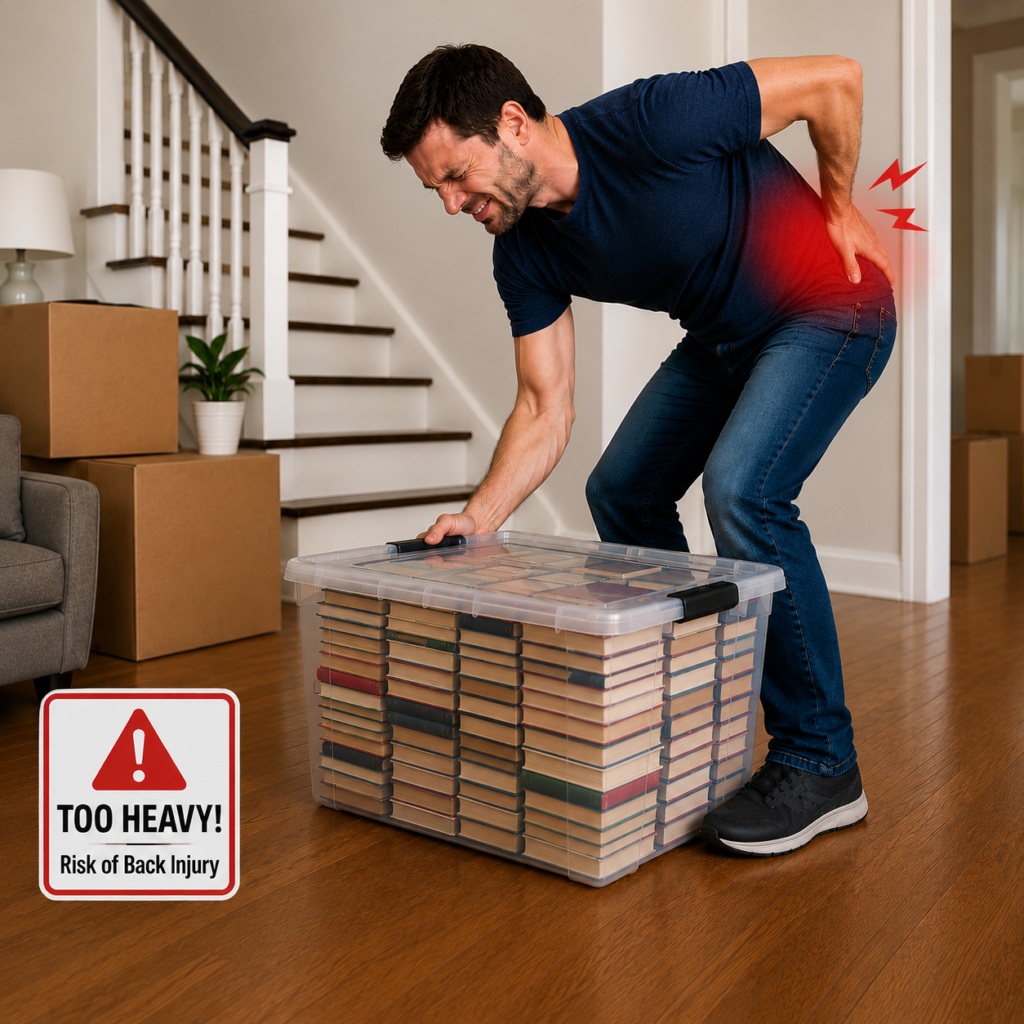
Large plastic totes for moving may seem like a convenient packing solution, but they can create serious safety and handling problems when overloaded with books, files, tools, and other heavy household items. At AMWAT Moving Warehousing Storage, we frequently encounter heavy plastic totes during moves that are difficult to lift, difficult to maneuver, and potentially hazardous for both homeowners and moving professionals. Understanding how to properly pack plastic storage bins can help prevent injuries, protect your belongings, and make moving day significantly more efficient.
Large Containers Are Not Designed for Heavy Items
Professional movers follow a simple rule: the heavier the item, the smaller the container. Books, files, tools, canned goods, and other dense items should be packed in small boxes that can be lifted safely. Large containers should be reserved for lightweight, bulky items such as pillows, comforters, stuffed animals, and seasonal decorations.
Medium boxes work well for towels, linens, shoes, kitchen plastics and mixed household items.
Small boxes should be used for books, files, tools, canned goods, small appliances and dense collectibles.
Following this guideline helps reduce injuries and makes moving day significantly more efficient.
Why Overloaded Plastic Totes Create Problems
When large bins are packed with heavy items, several issues occur:
Increased Risk of Injury: Heavy totes place excessive strain on the back, shoulders, knees, and arms. Improper lifting techniques or awkward carrying positions can lead to injuries for both homeowners and moving crews.
Difficult to Navigate – Large bins are often awkward to carry through:
* Doorways
* Hallways
* Stairwells
* Elevators
* Tight corners
Long or oversized plastic containers can be especially difficult to maneuver safely without striking walls, furniture, or door frames.
Difficult to Load Safely: Unlike traditional moving cartons, many oversized plastic bins do not fit securely on hand trucks or moving equipment.
The heavier the container becomes, the more difficult it is to control safely.
Not Every Container Is Appropriate for Stairs: One of the biggest misconceptions is that all containers work equally well in every moving environment.
For homes with multiple flights of stairs, overloaded plastic totes often become a significant safety concern.
Professional movers may refuse to handle excessively heavy containers and may require items to be repacked into smaller boxes before service can continue.
Safety for both the customer and the moving crew must always come first.
When AMWAT Moving Crates Make Sense
AMWAT’s reusable moving crates provide an excellent alternative to traditional cardboard boxes in the right environment.
Our crate system is designed to stack securely on crate skates, allowing multiple crates to be moved efficiently with minimal lifting.
AMWAT moving crates are ideal for:
* First-floor homes
* Elevator-access apartments and condominiums
* Office relocations
* Corporate moves
* Temporary storage projects
* Senior moves
Because the crates are designed to remain on skates whenever possible, they allow customers and movers to roll multiple containers at once rather than carrying them individually.
Pack Smart. Move Smart.
The goal isn’t to fit as much as possible into one container.
The goal is to pack safely.
Remember these simple guidelines:
✓ Large containers for light items.
✓ Medium containers for moderate-weight items.
✓ Small boxes for heavy items.
✓ Avoid overloading plastic totes.
✓ Protect your back and your belongings.
Whether you’re moving across town or across the country, proper packing can save time, reduce injuries, and help ensure a smoother moving experience.
If you have questions about packing supplies, moving crates, or preparing for an upcoming move, contact the professionals at AMWAT Moving Warehousing Storage.
Frequently Asked Questions About Plastic Totes for Moving
Yes. Professional movers may require excessively heavy containers to be repacked if they present a safety risk.
No. Books should typically be packed in small boxes to keep weight manageable and reduce injury risk.
Plastic bins can work well for lightweight items. Heavy items should be packed in appropriately sized moving cartons.
Pillows, comforters, stuffed animals, seasonal decorations, and other lightweight bulky items.
For first-floor homes, elevator-access buildings, and office relocations, moving crates can provide significant efficiency and reduce lifting requirements.


